
Just Bought an Older Home? Here’s Where Wood Rot Likes to Hide
Quick Summary:
- Older homes hide wood rot in predictable spots: window sills, door frames, porch columns, fascia and soffits, attics, crawl spaces, and deck ledger boards.
- Previous owners often cover damage with paint or a cosmetic patch instead of a real repair, so the problem keeps spreading out of sight.
- Catching rot early costs far less than waiting until it spreads into structural wood or forces a full replacement.
- A quick professional assessment soon after closing can save thousands down the road.
Table of Contents
You just closed on a home with real character, solid trim, and decades of history behind every wall. What the inspection report may not have flagged is where wood rot tends to hide in older houses. Past owners often cover it with paint or a quick patch instead of an actual repair, so the damage keeps spreading quietly behind the scenes for years. Knowing where to look now, before the last box is unpacked, can save you from a much bigger and more expensive problem later.
Window Sills Take the Brunt of Decades of Weather
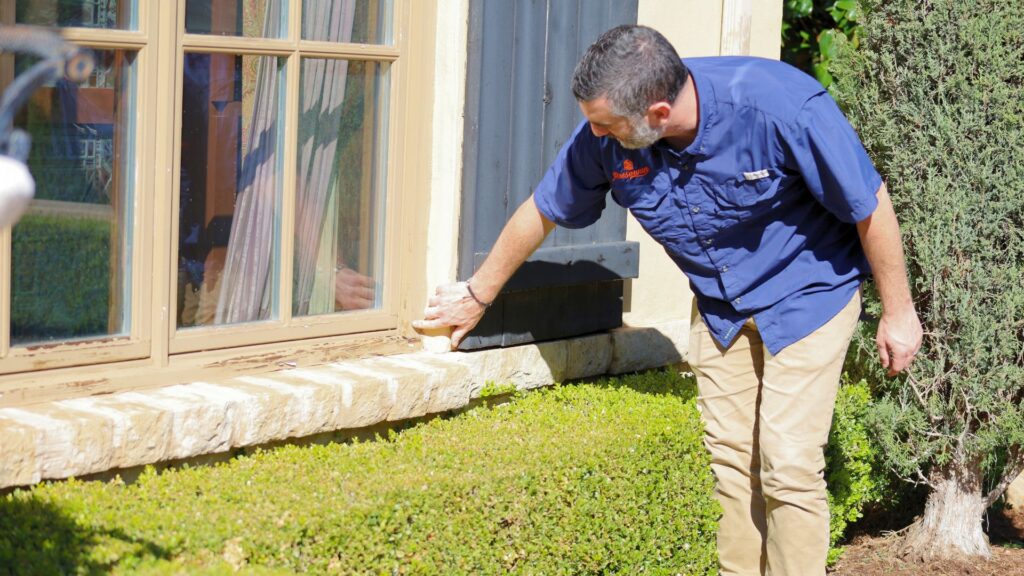
Water pools on window sills every time it rains, and paint eventually fails to keep it out. Once moisture gets under the surface, the wood stays damp and soft long before anything looks wrong from the street. Press a screwdriver gently into the sill and the corners of the frame. If it sinks in easily or the wood feels spongy, rot has already set in beneath the paint. Bubbling or flaking paint around a sill, or a slightly discolored patch on interior trim below the window, is often the first visible clue that something is happening underneath.
Door Frames and Thresholds Often Hide Rot Behind Fresh Paint
A fresh coat of paint is one of the easiest ways to make an older home look move-in ready, and it’s also one of the easiest ways to mask a problem. Check the base of exterior door frames and the threshold where wood meets the ground or a porch slab. Gaps in weatherstripping let water track in behind the trim, so rot often develops on the inside of the frame first, out of view. If a door feels sticky, sags slightly, or doesn’t close flush anymore, the frame underneath is worth a closer look before you assume it’s just settling with age.
Porch Columns and Railings Trap Moisture at the Base
Older porches were rarely built with today’s flashing and drainage details, so columns and railings that sit directly on concrete or in ground contact are especially vulnerable. Moisture wicks up from the base and stays trapped where the wood meets a hard surface, with nowhere to dry out. Check the bottom foot or so of every column and post, since that’s usually where rot starts even when the rest of the column still looks solid and freshly painted. A hollow sound when tapped, or slight give when you press near the base, is a reliable warning sign worth taking seriously.
Fascia and Soffits Rot Where You Rarely Look Up
Clogged or overflowing gutters send water directly behind the fascia board, and from there it soaks into the soffit above. Because this area sits high on the roofline, it’s easy to miss until paint starts peeling, boards start sagging, or dark staining shows up along the roof edge after a storm. Binoculars or a slow walk around the exterior after a heavy rain will usually reveal problem spots long before they show up as a leak inside the house.
Attics and Crawl Spaces Deserve a Second Look
Attics and crawl spaces rarely get a second look after closing, but older homes often have poor ventilation in both. Trapped humidity in a crawl space encourages rot in floor joists and subflooring, while attic rafters and roof decking near the eaves take on moisture from minor roof leaks that go unnoticed for seasons at a time. A musty smell, sagging insulation, or visible dark staining on framing in either space is worth investigating before it spreads further into the structure of the home.
Deck Ledger Boards Carry Real Structural Risk
The ledger board that bolts a deck to the house is one of the most important connections on the entire structure, and on older homes it was often installed without the flashing that current codes require. Water gets trapped between the ledger and the siding, and rot here isn’t cosmetic; it’s a safety issue. This is a case where a true structural repair matters more than a patch. Preservan’s Everesin epoxy system bonds permanently to sound wood rather than just filling a gap, an approach the National Park Service has trusted for historic preservation work since the 1970s.
Areas around older plumbing stacks and roof penetrations deserve the same scrutiny. Anywhere a pipe or vent passes through a wall or roof, decades of small leaks can add up to serious hidden damage that only shows up once you start looking closely at the surrounding wood and framing.
Don’t Let Hidden Rot Turn Into a Costly Surprise
Moving into an older home means inheriting whatever the last owner chose not to deal with. A proactive assessment now, while everything is still fresh, is a lot cheaper than discovering a soft windowsill during your first winter storm. Preservan repairs wood rot for a fraction of replacement cost, often under $1,000 and up to 90% less than tearing out and rebuilding.
Book a free assessment, and Preservan will identify exactly where your new home needs attention, backed by a 10-year warranty and the trust of more than 2,700 homeowners already served. Get ahead of problems while they’re still small and affordable to fix.