
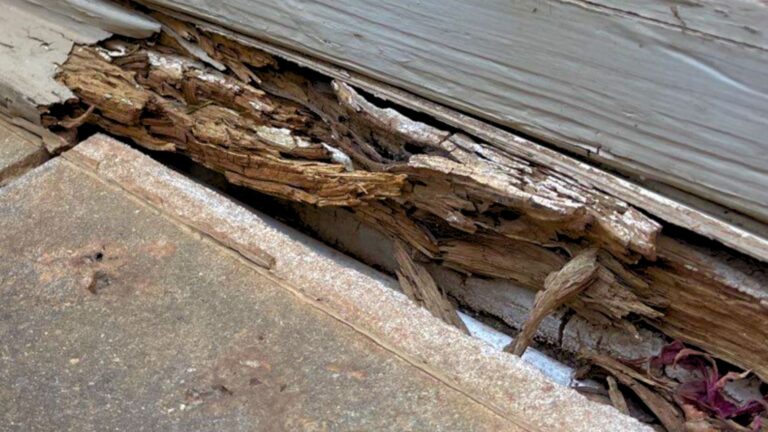
Wood rot is caused by fungi that break down the structural fibers of wood when moisture is present. Surface repairs, such as fillers or paint, rarely stop the decay because the fungus continues spreading beneath the surface. Permanent wood repair removes compromised material, eliminates the moisture conditions that allow fungi to grow, and restores structural strength with bonded repair materials. Addressing rot at the source preserves decks and exterior wood structures and often avoids the cost of full replacement.
Table of Contents
Why Wood Rot Starts in the First Place
Wood rot is not simply cosmetic damage. It is a biological process caused by fungi that consume the structural fibers inside wood.
When wood absorbs moisture and remains damp, fungal spores begin feeding on cellulose and lignin, the natural compounds that give wood its strength. Once moisture levels reach about 20 percent, the conditions are ideal for decay organisms to grow and spread.
Outdoor structures such as decks, railings, and porch posts are especially vulnerable because they experience constant exposure to rain, humidity, and seasonal weather cycles.
Common triggers of wood rot include:
- Trapped moisture around posts and beams
- Poor airflow beneath decks
- Cracks or exposed end grain absorbing water
- Leaves or debris holding moisture against wood surfaces
Once decay begins, the fungi continue breaking down the internal fibers of the wood until the structural strength is compromised.
Why Surface Fixes Rarely Stop Wood Rot
Many homeowners attempt to repair wood rot by filling damaged areas or covering them with paint. While this may improve appearance temporarily, it rarely stops the underlying decay.
Rot often develops deep inside the wood before visible symptoms appear. By the time a board feels soft or paint begins to peel, fungal activity may already be spreading within the structure.
Surface treatments can also trap moisture inside the wood. When moisture remains present, the fungi responsible for decay continue feeding on the wood fibers beneath the repair.
Common warning signs of hidden rot include:
- Soft or spongy wood when pressed
- Cracking along the grain
- Dark staining or discoloration
- A persistent damp or musty smell
These symptoms indicate that the internal structure of the wood may already be weakening.
How Wood Rot Spreads Through Structural Components
Fungal decay does not stay confined to one small area. Once the process begins, the fungi spread through wood fibers and gradually weaken surrounding structural components.
Deck structures are particularly susceptible because moisture can move through multiple layers of wood. Water absorbed by deck boards can travel into joists, beams, and support posts where ventilation is limited.
Fungal decay organisms break down cellulose first, leaving wood brittle and prone to cracking. Over time, the structure becomes weaker and may lose its ability to support weight.
Critical structural areas that commonly develop rot include:
- Deck posts and support beams
- Stair stringers
- Porch columns
- Window and door trim
- Structural framing near moisture exposure
When these components deteriorate, replacement often becomes far more expensive than early repair.
Preservation vs Replacement: A Smarter Approach
For decades, the typical response to wood rot has been replacement. Entire boards, rails, or deck sections are removed even when only a small portion of the wood has deteriorated.
However, replacing large sections of wood is often unnecessary.
Modern restoration methods allow damaged areas to be repaired while preserving the majority of the original structure. By removing only the compromised material and restoring the surrounding wood, homeowners can maintain structural integrity without major demolition.
This preservation approach offers several advantages:
- Extends the life of existing wood structures
- Reduces the cost of large replacement projects
- Prevents unnecessary construction waste
- Maintains the original design and materials of the structure
Preservation-focused repair is often the most practical solution when rot is caught early.
How Permanent Structural Wood Repair Works
Permanent wood repair focuses on stopping decay where it starts instead of covering the damage.
The process typically involves three key steps:
1. Remove all decayed wood
Damaged material is carefully removed until solid, healthy wood remains.
2. Stabilize the surrounding structure
Treatments can prevent remaining fungal activity and prepare the wood for repair.
3. Restore structural strength
Advanced repair materials bond with the surrounding wood fibers to rebuild the damaged section and restore its load-bearing capability.
Unlike surface fillers, these bonded materials integrate with the existing structure. The result is a durable repair that restores both appearance and strength.
This method preserves the majority of the original wood while stopping the conditions that allowed rot to spread.
Why Early Intervention Protects Your Home
Wood rot rarely stops on its own. As long as moisture remains present, fungal organisms continue breaking down wood fibers.
Under ideal conditions, visible rot can develop within a few months to a few years depending on climate and exposure.
Early detection allows homeowners to repair small areas of decay before structural components are affected.
Routine inspections should focus on areas where moisture commonly collects:
- Deck posts at ground contact
- Stair and railing connections
- Horizontal surfaces where water pools
- Trim around windows and doors
Addressing rot early preserves more of the original structure and significantly reduces repair costs.
Protect Your Wood Before Replacement Becomes Necessary
Wood rot often starts small but spreads quietly through structural components. Addressing decay at the source can restore strength and extend the life of decks, trim, and exterior wood structures.
Preservan focuses on permanent wood repair that removes rot, restores structural integrity, and preserves the wood you already have. Our specialists have repaired thousands of wood structures using restoration methods designed to last.
If you suspect wood rot on your deck or exterior wood, schedule an inspection with Preservan to see whether permanent repair can restore your structure and prevent costly replacement.