
- Outdoor wood deteriorates quickly from sun, moisture, and temperature changes
- Most staining fails due to poor preparation and surface-level application
- Deep cleaning, sanding, and penetrating stains are key to long-term protection
- Minor damage should be repaired before staining to avoid bigger issues
- A preservation-first approach reduces maintenance and extends lifespan
Table of Contents
Why Decks and Fences Break Down Faster Than Expected
Decks and fences are constantly exposed to the elements, and that exposure adds up quickly. Sunlight dries out wood fibers, moisture seeps in during rain or snow, and temperature swings cause expansion and contraction. Over time, this leads to fading, cracking, and structural wear.
The U.S. Forest Products Laboratory identifies moisture and UV exposure as primary drivers of wood deterioration, especially when wood is left unprotected. Even newer structures can begin to show signs of aging within a few seasons.
What often gets overlooked is that staining is not just cosmetic. Staining plays a critical role in protecting wood from water intrusion and sun damage. Without that protection, small issues like surface dryness can turn into splitting, warping, or early-stage rot.
Why Most Deck and Fence Staining Doesn’t Last
Many homeowners find themselves re-staining every couple of years. The issue is rarely the wood itself. It is the process used to treat it.
Common reasons staining fails include:
- Incomplete cleaning that leaves dirt, mildew, or old coatings behind
- Skipping sanding, which prevents proper absorption
- Using low-quality stains that sit on the surface
- Applying stain to wood that still contains moisture
When the stain does not properly penetrate, it creates a thin surface layer that breaks down quickly. This leads to peeling, uneven color, and repeated maintenance cycles.
Proper preparation is what separates short-term results from long-term protection. Without it, even the best stain will struggle to perform.
What Actually Protects Outdoor Wood Long-Term
Long-lasting results come from a process focused on preparation and penetration, not just application. The goal is to protect the wood from the inside out.
A more effective approach includes:
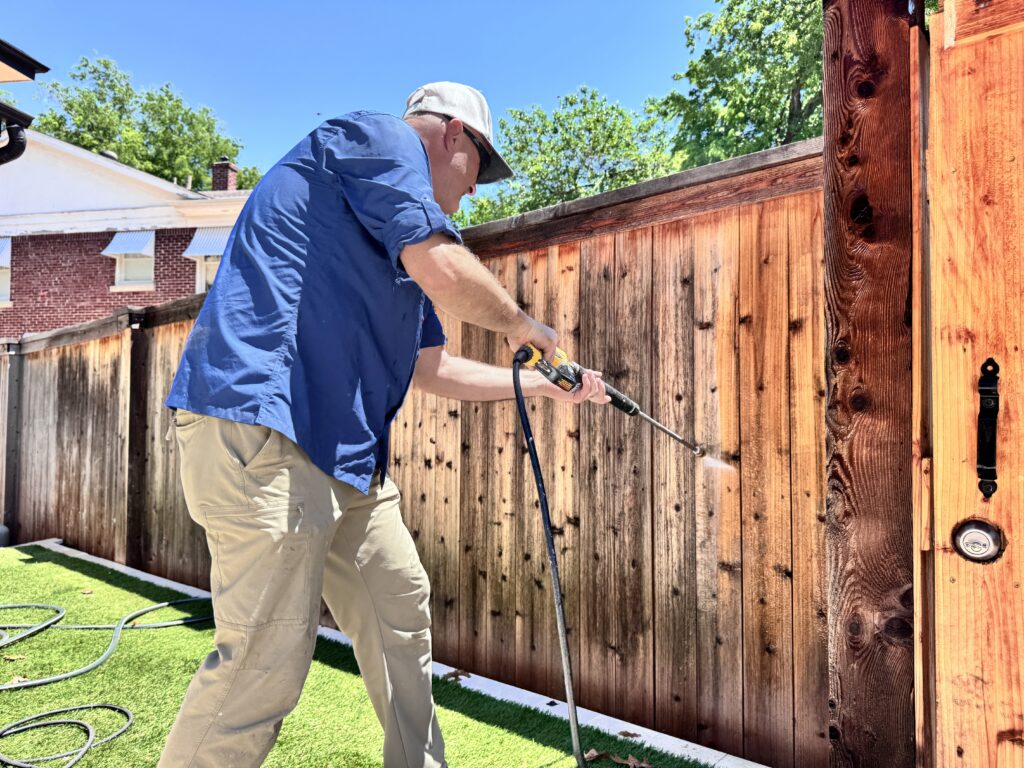
- Deep cleaning to remove buildup and open the wood grain
- Dust-controlled sanding to create a smooth, absorbent surface
- Penetrating, high-quality stains that bond within the wood fibers
- Eco-friendly, low-VOC products that are safe for families and pets
Penetrating stains are especially important because they move with the wood as it expands and contracts. This reduces the likelihood of peeling and extends the lifespan of the finish.
This type of system is designed to protect against moisture, UV exposure, mold, and mildew while maintaining a natural, finished look.
When to Stain vs When to Repair
Not every issue can be solved with a fresh coat of stain. Understanding the difference between surface wear and structural damage helps avoid bigger problems down the line.
Staining is the right solution when:
- Wood is structurally sound but faded or dry
- Color has worn off due to sun exposure
- Minor surface wear is present
Repair should come first when:
- Boards are cracked, splintering, or soft to the touch
- Signs of rot or moisture damage are visible
- Sections of the structure feel unstable
Addressing these issues early prevents further deterioration. A preservation-focused approach combines targeted repairs with protective treatments, helping extend the life of the entire structure rather than masking underlying problems.
The Cost of Waiting vs Proactive Wood Care
Delaying maintenance often leads to more expensive outcomes. What starts as discoloration or light cracking can progress into structural damage that requires board replacement or full rebuilds.
Proactive wood care provides clear benefits:
- Extends the usable life of decks and fences
- Reduces the frequency of maintenance cycles
- Prevents water intrusion and rot
- Maintains overall appearance and property value
Industry research shows that preventative maintenance can significantly reduce long-term repair costs compared to reactive replacements. Taking action early is not just about appearance. It is about protecting the investment and avoiding unnecessary expenses.
A Smarter Approach to Long-Term Wood Care
Protecting outdoor wood requires more than occasional staining. It takes a system built around proper preparation, high-quality materials, and attention to detail.
Preservan’s approach focuses on restoring and protecting wood through deep preparation, dust-controlled sanding, and the use of eco-friendly, penetrating stains designed for long-term performance. By addressing minor damage early and applying treatments that bond with the wood, this process helps reduce maintenance cycles and extend the life of decks and fences.
Get a Professional Evaluation
If your deck or fence is starting to show signs of wear, now is the time to take a closer look. Preservan helps homeowners extend the life of their outdoor wood structures through a repair-first, preservation-focused approach that reduces the need for full replacement.
Schedule a consultation to assess your deck or fence and get clear recommendations on next steps.