
From Rot to Renewal: The Proven Method That Lasts for Decades
Quick Summary:
- Rotted wood on windows, doors, siding, or trim doesn’t automatically mean full replacement.
- Preservan’s epoxy-based repair process removes only the damaged wood, then rebuilds and seals it with EverResin, a structural epoxy system.
- The repair is backed by a 10-year product and workmanship warranty.
- Repair typically costs a fraction of replacement, takes less time, and preserves the home’s original materials and character.
- The process is reviewed and approved by preservation and building science professionals, including the National Park Service and Fine Homebuilding.
Table of Contents
Homeowners often assume that once wood starts to rot, the only real fix is to tear it out and start over. That belief leads to unnecessary demolition, mismatched replacement materials, and bills that are far higher than they need to be. In most cases, rotted wood can be repaired, not replaced, using a permanent process that restores strength and appearance without losing what made the original feature worth keeping.
Why Rotted Wood Doesn’t Always Mean Replacement
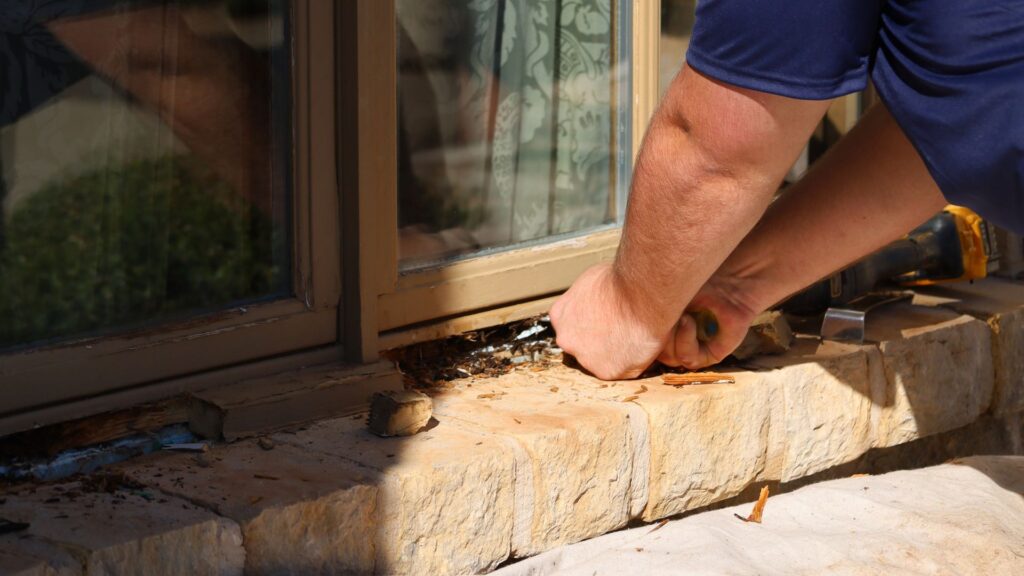
Wood rot looks alarming, especially when it’s spread through a window sill, door frame, or section of siding. But rot is rarely an all-or-nothing problem. In most cases, decay is contained to a specific section of the wood, while the surrounding material is still structurally sound. Removing only the compromised wood and rebuilding that section preserves everything else, including original trim profiles, historic detailing, and matching grain that’s difficult or impossible to replicate with new lumber. Homeowners in older neighborhoods often worry that repair means settling for a patch job. In reality, a proper epoxy repair restores both strength and appearance, so the finished piece looks and performs like the original.
How Preservan’s Repair Process Works
Preservan’s repair method follows four steps: identifying the full extent of the decay, injecting a structural consolidant into the remaining softened wood, applying a moldable epoxy to rebuild missing material, and sculpting the cured epoxy to match the original profile. The epoxy used in this system, EverResin, is a two-part compound that becomes rock-hard once mixed, unlike traditional wood fillers or caulk-based patches that shrink and crack over time. Because the consolidant penetrates deep into the wood fibers before the rebuild stage, the repair bonds at a structural level rather than sitting on the surface. The result is a piece of wood that’s stronger in the repaired area than it was before the damage occurred.
The Hidden Costs of Full Replacement
Replacing a window, door, or section of siding sounds straightforward, but it rarely is. Custom millwork to match existing profiles can take weeks to source or fabricate. Removal and disposal add labor costs before any new material goes in. And once the new piece is installed, it often looks noticeably different from the surrounding wood, especially on older homes where original materials and dimensions aren’t standard sizes anymore. Repair avoids all of this. There’s no demolition, no waiting on custom orders, and no mismatched replacement piece standing out against the rest of the home. For homeowners weighing their options, that difference in cost and disruption is usually the deciding factor.
Preserving Your Home’s Original Character
Original wood, especially in older homes, carries details that new material can’t easily reproduce. That includes tight grain from old-growth lumber, hand-applied trim profiles, and construction techniques that simply aren’t used anymore. The National Park Service’s technical preservation guidelines note that repairing existing historic wood features is generally preferred over replacement, since even a well-matched replacement can diminish a property’s architectural integrity. Homeowners don’t need a historic designation to benefit from that same principle. Keeping original material intact, wherever it can be safely repaired, maintains the character that made the home worth buying in the first place, and it does so without the guesswork of trying to match a hundred-year-old profile with a modern one.
Built to Last: A Permanent Fix, Not a Temporary Patch
A repair is only worth doing if it holds up. That’s why every Preservan repair is backed by a 10-year product and workmanship warranty, covering both the EverResin material and the labor behind the installation. Unlike a store-bought filler that shrinks, cracks, or fails within a season or two, a properly applied epoxy repair is designed to perform for decades under normal weather exposure. Homeowners get a fix they don’t have to think about again, on the same wood they already have.
Ready to Stop the Damage Before It Spreads
Wood rot doesn’t wait, and neither should a repair plan. The longer damaged wood sits, the more likely it is to spread into surrounding material, turning a small repair into a bigger one.
If you’ve spotted soft, discolored, or crumbling wood anywhere on your home, from a window sill to a porch post, it’s worth getting it looked at before deciding on replacement. Preservan’s repair process has been reviewed by the National Park Service and Fine Homebuilding, and every job is backed by a 10-year warranty.
Reach out to schedule an inspection and find out whether that rotted wood can be repaired instead of replaced.