
What Homeowners Need to Know About Deck Washing vs. Pressure Washing
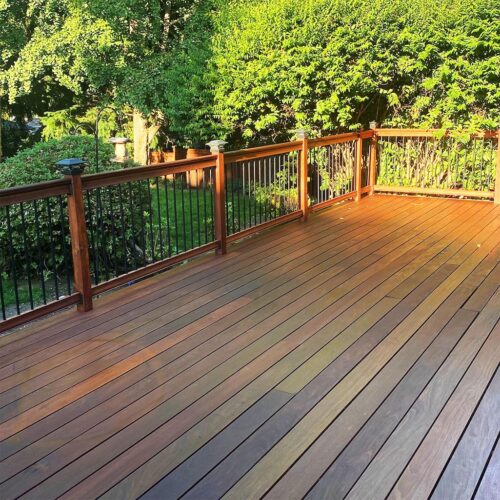
Pressure washing and deck washing are not the same thing. Using too much pressure, the wrong tip, or the wrong technique on wood can gouge the grain, force moisture into the structure, and compromise any stain or sealant you apply afterward. Soft washing and professional deck cleaning protect the wood, high-pressure approaches often damage it.
Table of Contents
Walk outside after a long winter, and your deck will tell you something. Mold, algae, weathered gray wood, and surface staining are all normal results of seasonal exposure. The instinct for many homeowners is to rent a pressure washer and blast it clean — it’s fast, satisfying to watch, and feels like the obvious fix. But on a wood deck, done wrong, that approach can do more damage than the weather did. Before you start, it’s worth understanding what distinguishes pressure washing from proper deck washing, and why it matters for the wood underneath.
Not All Surfaces Are the Same
Pressure washing is genuinely effective on hard, dense surfaces like concrete driveways, brick, stone, and composite materials, which can handle high-pressure water because they don’t absorb it the same way wood does. Most residential decks are built from softwoods: cedar, pine, fir, or treated lumber. These materials are porous and responsive to force in ways that concrete simply isn’t. When exposed to high-pressure water:
- Wood grain gets gouged, creating grooves and rough fibers across the surface
- Raised fibers dry into splinters along high-traffic areas
- High pressure forces moisture deep into the wood structure, well past the surface
- Existing stain and sealant get stripped unevenly, leaving bare patches
The result looks clean immediately after, but the underlying condition is often worse than before the cleaning started. That’s the difference between treating the surface and actually caring for the wood.
Why PSI Is Only Part of the Problem
Even within a “safe” PSI range, the outcome depends on factors that aren’t visible on the control dial, like the nozzle tip selection, spray angle, working distance, and how long the stream contacts any one point. A zero-degree or 15-degree tip on soft pine at close range can shred surface fibers in seconds, even at moderate pressure. Professional deck washing accounts for wood species, existing finish condition, age of the deck, and the type of contaminants being removed. There’s no single setting that works across the board.
The Damage That Shows Up Later
Some pressure washing damage is immediate: tiger striping from inconsistent passes, torn wood grain, or patchy cleaning where some areas got more pressure than others. But some of the most costly damage isn’t visible right away. When water is forced deep into wood that’s already showing signs of weathering, checking, or moisture stress, it creates elevated moisture content that the wood isn’t built to manage. Over the weeks that follow, that excess moisture can:
- Bubble and lift any stain or sealant applied after the cleaning
- Accelerate mold and mildew growth inside the wood, not just on the surface
- Lead to soft spots, rot, or structural changes in boards that seemed solid
For a deck that’s already weathered or has existing wear, aggressive pressure washing often converts cosmetic issues into structural ones. That turns a routine cleaning project into a repair or replacement conversation.
What This Means for Staining and Restoration
If you’re planning to stain or reseal your deck after cleaning, which is the right move for protecting it long-term, the cleaning method directly affects how well that work holds up. Pressure washing raises the wood grain and can leave an uneven surface texture that prevents stain from bonding evenly. Stain applied to wood that was over-washed tends to peel prematurely, fade faster, or fail to penetrate uniformly across the deck. That leads to redoing the work sooner than necessary, at additional cost. Soft washing and controlled cleaning create a surface that’s genuinely prepared for staining: clean, settled, and ready to accept a protective finish that will actually last.
When to Call a Wood Care Professional
If your deck shows algae or mold growth, surface staining, graying from UV exposure, or if it’s been more than a season since the last professional cleaning, a professional assessment is the right starting point. Preservan specializes in wood preservation, not just cleaning, which means every project starts with understanding the wood’s current condition, what it actually needs, and the correct process for getting it there. That includes soft washing, proper prep, staining, sealing, and any necessary repairs before protective coatings are applied.
We back our work with expertise in wood preservation, not just the equipment to spray it down. If your deck is due for care this season, contact Preservan for an assessment. We’ll tell you what your deck or fence needs before we start, and we’ll do the work in a way that protects it for years to come.