
Table of Contents
Termite damage and wood rot can look surprisingly similar at first. Homeowners often notice soft wood, peeling paint, or small cracks and assume the cause, only to learn later it was something different. Getting the diagnosis right matters because each issue spreads differently and requires its own solution.
For many people, that uncertainty brings stress, especially when the home includes historic trim or original windows. Understanding the clues behind each type of damage helps you act early and avoid repairs that become more complicated or costly.
This guide breaks down how termite damage starts, how wood rot forms, and the signs that help you tell them apart so your home receives the right care from the start.
How Termite Damage Begins
Termites feed on the cellulose in wood and are drawn to moisture and hidden areas, making older homes especially vulnerable. Once they find a food source, they create tunnels that weaken the structure from the inside out. Because the damage is concealed, homeowners often notice the problem only after wood begins to warp, collapse, or show irregular patterns. Early detection helps stop colonies before they spread further.
Early Signs of Termite Damage
Even though termite activity is hidden, it leaves distinct clues. Homeowners may notice:
- Hollow-sounding wood when tapped
- Maze-like tunnels or channels when wood is opened
- Buckling or distorted surfaces
- Mud tubes on foundations or exterior walls
- Small piles of termite droppings (frass) near baseboards or windows
- Paper-thin wood surfaces that collapse when pressed
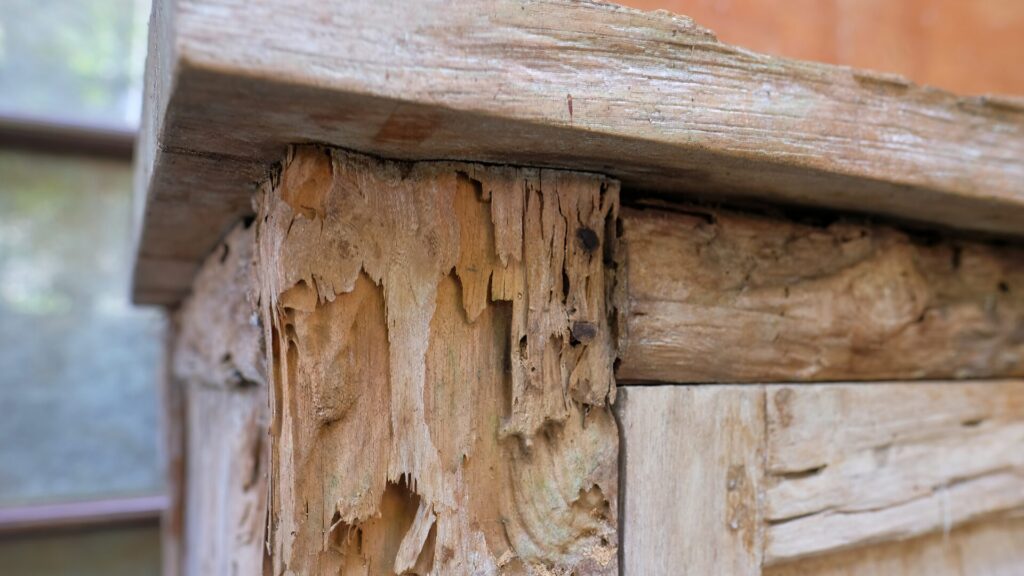
Termite damage often follows the grain of the wood, leaving long, carved pathways that weaken the internal structure. Because the outside may look intact at first, many homeowners underestimate the severity of the problem.
How Wood Rot Starts
Wood rot begins when fungi break down the fibers in damp or poorly ventilated wood. Even small leaks or worn caulking can trap moisture long enough for decay to start. Unlike termites, rot doesn’t create tunnels; it changes the wood’s texture, color, and strength as the fungus spreads through wet areas.
Common Signs of Wood Rot
Unlike termites, wood rot has more visible and predictable characteristics. Homeowners often see:
- Soft or spongy areas
- Cracking, crumbling, or brittle surfaces
- Discoloration, often darker or bleached
- Musty odors around windows, sills, or trim
- Flaking or peeling paint that reveals weakened wood underneath
- Warping or swelling caused by moisture absorption
Rot spreads only where moisture is present; it does not travel through dry material the way termites do. Still, the longer wood stays damp, the deeper the fungal decay becomes.
Termite Damage vs. Wood Rot: Key Differences
Even though they can share surface symptoms, termite damage and wood rot leave distinct patterns that trained eyes can quickly recognize. Some of the most reliable differences include:
- Texture
- Termites: Internal hollowing, thin outer surfaces, clean tunnels
- Rot: Spongy, brittle, stringy, or crumbly wood
- Direction of Damage
- Termites: Typically follow the grain of the wood
- Rot: Expands outward wherever moisture collects
- Surface Indicators
- Termites: Mud tubes, frass piles, blistered or rippled surfaces
- Rot: Discoloration, soft spots, cracked or peeling paint
- Structural Behavior
- Termites: Damage continues as long as the colony remains active
- Rot: Progress slows or stops once the moisture source is resolved
- Cause
- Termites: Insect activity and feeding
- Rot: Fungal growth triggered by prolonged moisture
Accurate diagnosis matters. A homeowner treating rot as a pest issue—or assuming termite damage is just rot—may delay the right solution and give the real problem time to worsen.
Why Misdiagnosis Becomes Costly
When termites go untreated, the colony continues feeding and expanding into new areas of the home. When rot goes untreated, moisture remains trapped, allowing fungi to spread into deeper layers. Both situations lead to more extensive structural repairs, and in historic homes, irreplaceable features may be lost.
Moisture and pests also tend to overlap. Damp, decaying wood is especially attractive to termites, so an area that starts out as rot can eventually become termite activity as well. Once both are present, damage accelerates quickly.
A careful inspection helps clarify:
- Whether moisture, pests, or both are involved
- How far the damage has spread
- Which structural elements can still be preserved
- What kind of repair will last long-term
That clarity helps homeowners avoid unnecessary replacements and overspending while still protecting the integrity of the home.
What Preservan Looks For During an Assessment
Preservan’s team evaluates the whole story behind the damage, not just what shows on the surface. During an assessment, our technicians examine:
- Moisture levels and potential leaks
- Visible and hidden fungal activity
- Texture changes that indicate rot vs. insect damage
- Entry points or conditions that attract termites
- Structural strength of the remaining wood
- Patterns that reveal tunneling compared to general decay
This careful approach helps homeowners understand the root cause and the true scope of the issue. It also supports informed decisions about preserving original woodwork instead of replacing it whenever restoration is possible.
How Permanent Wood Repair Addresses the True Cause
Once the source of damage is identified—moisture, pests, or both—Preservan restores the area using its Everesin system. This material bonds permanently with the remaining wood and reinforces it from within. If termites are involved, a pest professional treats the colony first, and then Everesin rebuilds the weakened sections.
By strengthening existing wood instead of removing it, this method preserves the home’s character and avoids unnecessary demolition and waste, which is especially important in older or historic homes.
A Confident Path Forward With Preservan
Understanding the difference between termite damage and wood rot gives homeowners the knowledge they need to act early and protect the unique features of their home. Each issue has its own pattern, cause, and long-term impact, but both can be managed effectively when identified correctly.
If you’ve noticed soft spots, unusual patterns, or signs that do not feel quite right, you can book an assessment to get clear answers and a long-lasting plan for repair. Preservan is ready to help you protect your home with confidence.